


#KARAYIB · Live feed · Dominique
The Kalinago, a living people of the Caribbean
By NAGO News
3 min read
The Kalinago are not a vanished people. The first inhabitants of the Lesser Antilles, long called "Island Caribs" by colonisers, they still live today, mainly in Dominica, where some 3,000 of them live on a territory set aside for them since 1903. A young Kalinago teacher, Chaleena, made the point recently in a widely shared video: her people do not belong only to the past, and colonial narratives long erased or distorted their history.
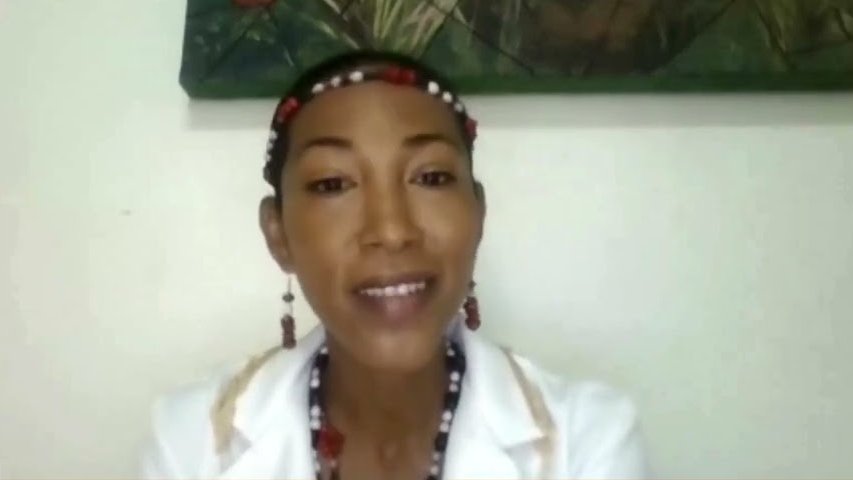
Born in Dominica and adopted as a child in France, she now lives in Guadeloupe, where in September she launched a teaching programme, Kalinago Cultural Heritage. Her classes cover history, mythology and Káripuna, the name she gives the Kalinago language.
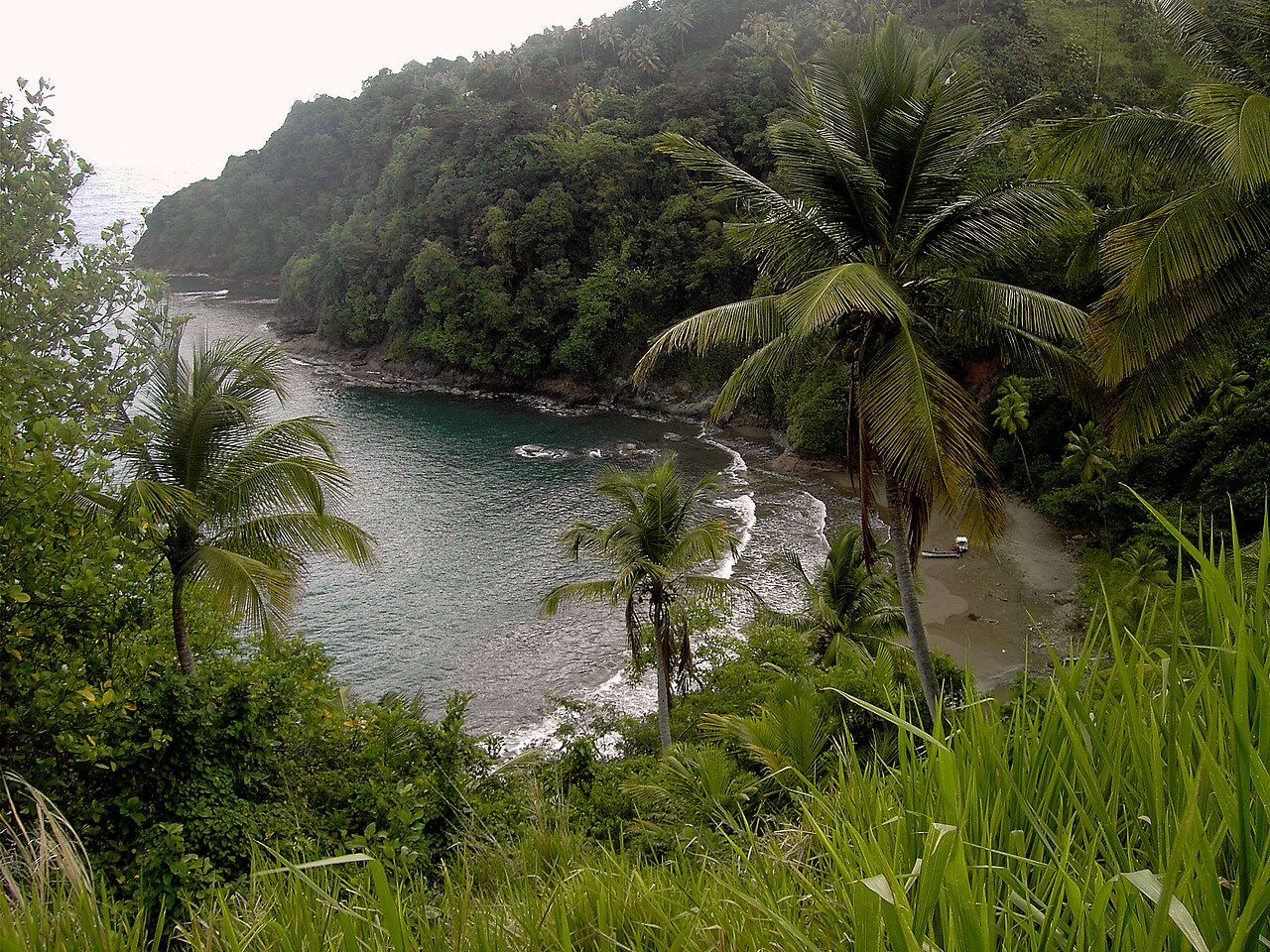
The Kalinago Territory covers about 15 km² (3,700 acres) on Dominica's east coast. It is made up of eight hamlets, including Salybia, its administrative centre. The 2011 census counted 2,112 residents; current estimates are around 3,000. Every five years the Kalinago elect a council and a chief. Since July 2024 the chief has been a woman, the nurse Anette Sanford, the first to hold the post. In 2023 Sylvanie Burton, who is also Kalinago, became President of Dominica. Since 2006 the Kalinago Barana Autê cultural village at Crayfish River has shown visitors basket weaving, pottery and cassava processing.
That survival came in the face of colonial violence. In 1626, on St Kitts, English and French settlers led by Thomas Warner and Pierre Belain d'Esnambuc massacred the island's Kalinago; one historian puts the death toll at about 2,000, at a place known as Bloody Point. In 1660 a treaty between France, England and the Kalinago confined them to Dominica and St Vincent. On St Vincent, Kalinago people mixed with free Africans, giving rise to the Garifuna people, whom the British deported in 1797 to the island of Roatán, in Honduras. In Trinidad and Tobago, the Santa Rosa First Peoples Community in Arima also keeps this memory alive.
The language fared worse. Kalinago, a language of the Arawakan family, has had no native speakers in Dominica since around the 1920s; a language descended from it survives among the Garifuna of Central America. Documentation and teaching projects, in Dominica and in Guadeloupe, are now trying to bring it back.
And Haiti? The island's first inhabitants were not the Kalinago but the Taíno. They were two distinct peoples, at times enemies: the Taíno described the Caribs as warriors who raided them. Yet their languages belonged to the same Arawakan family, and the two peoples also allied against the Spanish, notably in Puerto Rico. The country's very name comes from the Taíno: Ayiti, "land of high mountains", which Jean-Jacques Dessalines restored to the island when he proclaimed independence on 1 January 1804, in tribute to its first inhabitants. Taíno and Kalinago share the same colonial fate: conquest, massacres and a history written by others. A genetic study published in 2018 showed that Taíno heritage survives in the DNA of present-day Caribbean populations, notably in Puerto Rico.
Videos
Watch now.
Reporting by RCI, « Des cours pour faire revivre la culture Kalinago à Pointe-à-Pitre » (17 août 2026)
Wikipédia, « Kalinago Territory »
Antigua.news, « Dominica appoints first-ever female Kalinago chief » (23 juil. 2024)
Wikipédia, « Kalinago genocide of 1626 »
Historic St Kitts, « Bloody Point »
Wikipédia, « Island Carib language »
Wikipédia, « Santa Rosa First Peoples Community »
Université de Leyde, « Traces of indigenous Taíno in present-day Caribbean populations » (2018)
PNAS, « Origins and genetic legacies of the Caribbean Taino » (2018)
Photo : Hans Hillewaert, « Carib Territory (Dominica) », Wikimedia Commons, CC BY-SA 3.0
Image : Caribbean Freedom Fighters, « Anette Sanford greeting », Wikimedia Commons, CC BY 3.0
ewag (Instagram), témoignage de Chaleena Kalinago (17 sept. 2026)
 Caribbean Top 10: Popcaan at No. 1 with "Kick It Wid Myself"The Caribbean Top 10 for the week of November 16 to 22, 2026, is led by Popcaan with "Kick It Wid Myself," which enters directly a…
 "From Chains to Freedom": central bank exhibits Haiti's economic history in Cap-HaïtienThe Bank of the Republic of Haiti (BRH), the central bank, on Friday, November 13, opened the exhibition "From Chains to Freedom: …Duvalier funds: 40 years on, money frozen in Switzerland still not returned to HaitiNearly 40 years after the fall of Jean-Claude Duvalier, his family's money frozen in Switzerland has still not been returned to Ha…58 years ago, Haiti beat the United States 5-2 at Sylvio CatorThe Grenadiers face the United States on Saturday, November 14, in Miami. Fifty-eight years ago, on October 21, 1968, Haiti beat t…Caribbean Top 10 of all time: "La Vida Es Un Carnaval" by Celia Cruz in the lead this weekNAGO's Top 10 Caribbean songs of all time for the week of November 9, 2026, is topped by Celia Cruz with "La Vida Es Un Carnaval."…
Comments 0