


Naïka and her Haitian roots: an online debate over “cultural appropriation”
By NAGO News
3 min read
Singer Naïka is at the centre of a social-media debate. It began with a post on X on Tuesday, 24 November: “The shock when I found out that singer Naïka isn’t even Haitian. Cultural appropriation is wild.” The post was viewed more than 600,000 times in a day. No artist or media outlet has taken up the accusation, and Naïka has not responded.
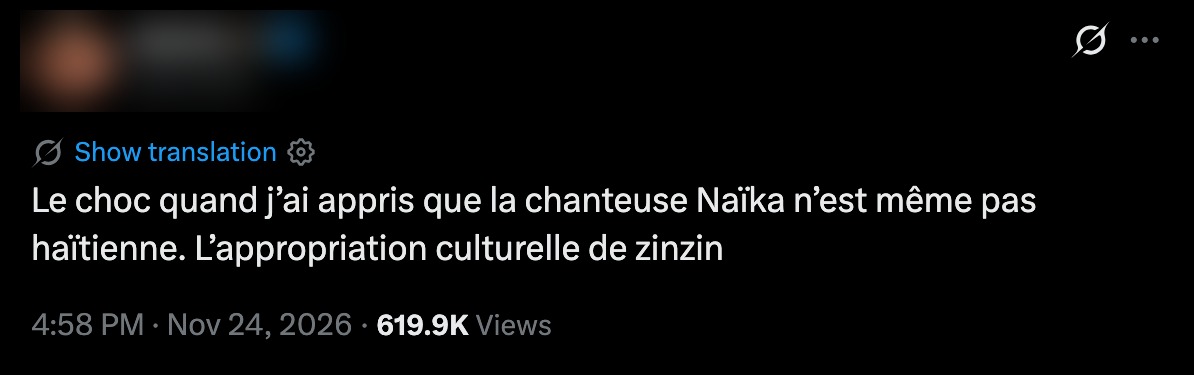
In the following hours, the author of the post explained her view: in her account, Naïka’s maternal grandparents immigrated to Haiti, it is unclear whether her mother was born there, and the singer, born in the United States, has never lived in Haiti. She accuses her of having suggested “several times” that she was of mixed Haitian heritage. NAGO could not verify these claims about the singer’s family.
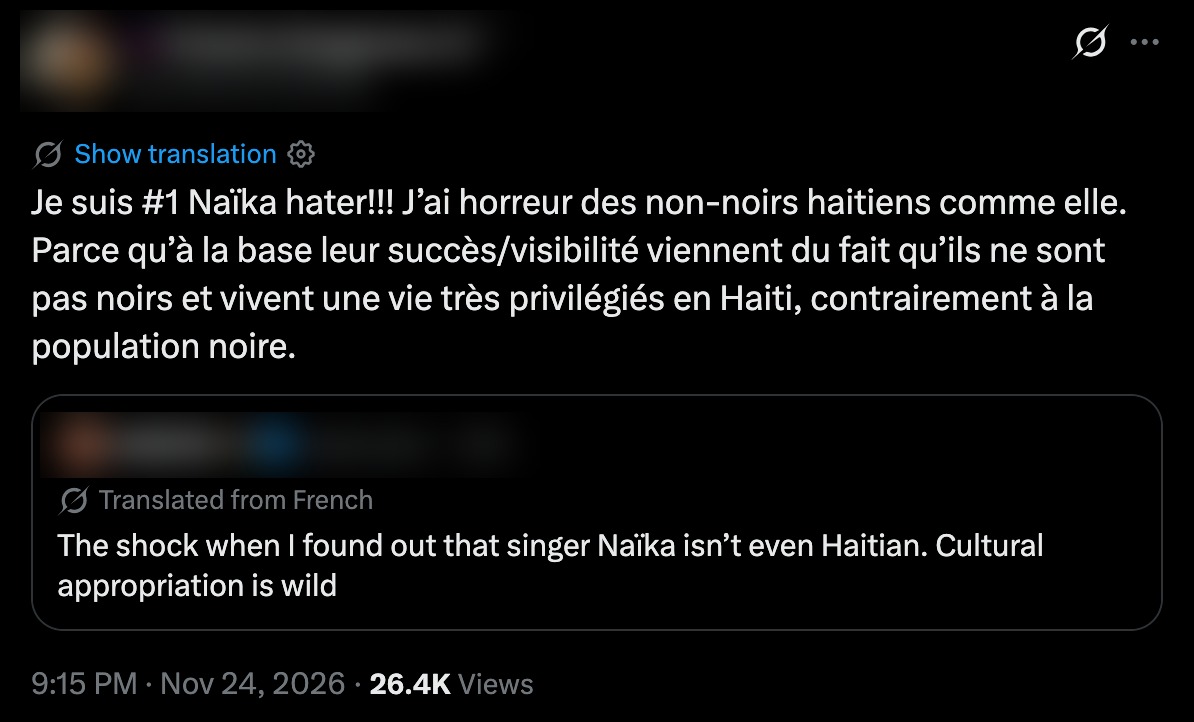
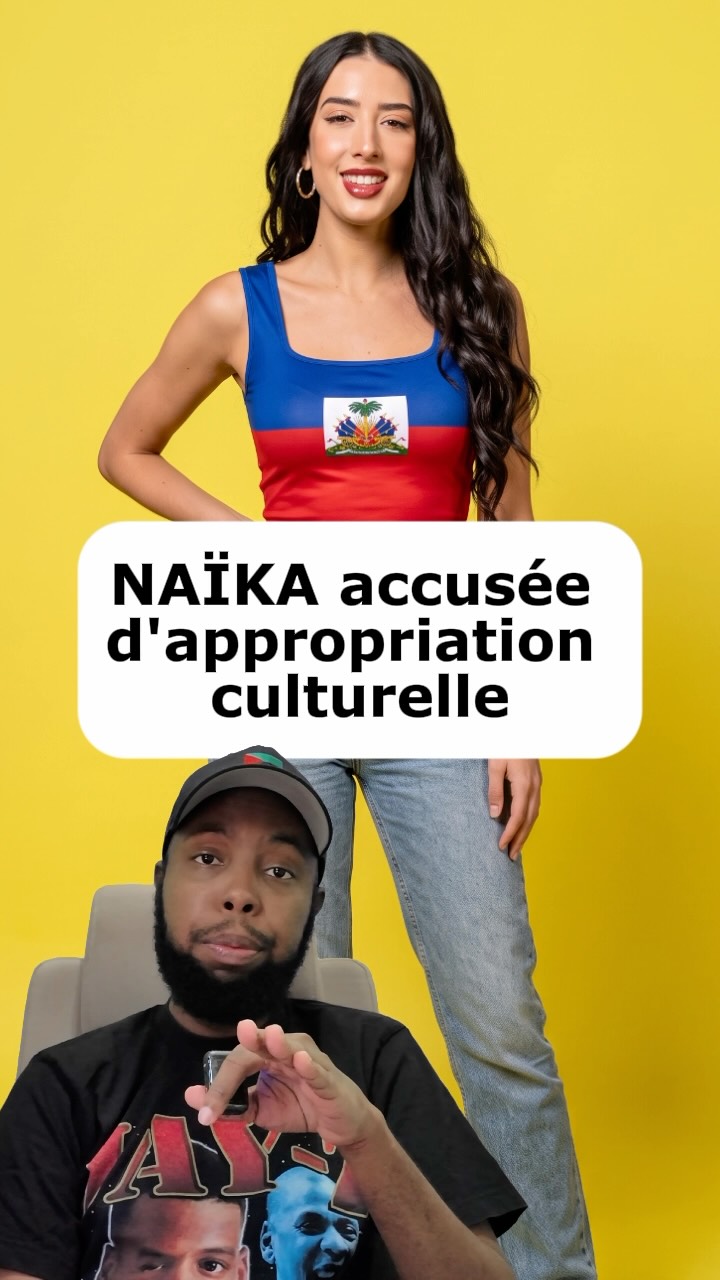
Other users shifted the debate to skin colour. “I can’t stand non-Black Haitians like her,” one user wrote, arguing that their success comes from the fact that “they’re not Black and live very privileged lives in Haiti, unlike the Black population”. That post was viewed more than 26,000 times. On Instagram, commentator Specta’s video “Naïka accused of cultural appropriation” revived the discussion on Wednesday.
Born in Miami, Victoria Naïka Richard is the daughter of a Haitian mother with Lebanese and Palestinian roots and a French father. She grew up between Guadeloupe, Kenya, Vanuatu, France and South Africa, spent childhood summers in Haiti with her grandmother, and settled in Miami at 16.
She has addressed the question of identity herself.
Haiti has an ever bigger place in her music. She covered the traditional song “Papa Gèdè (Bel Gason)”, worked with Haitian producer Michael Brun, blended konpa into her album Eclesia and, in May, released a Kreyòl version of “One Track Mind” after fans asked for it. At the NRJ Music Awards in October, she said she wanted “to really honour Haiti on stage”.
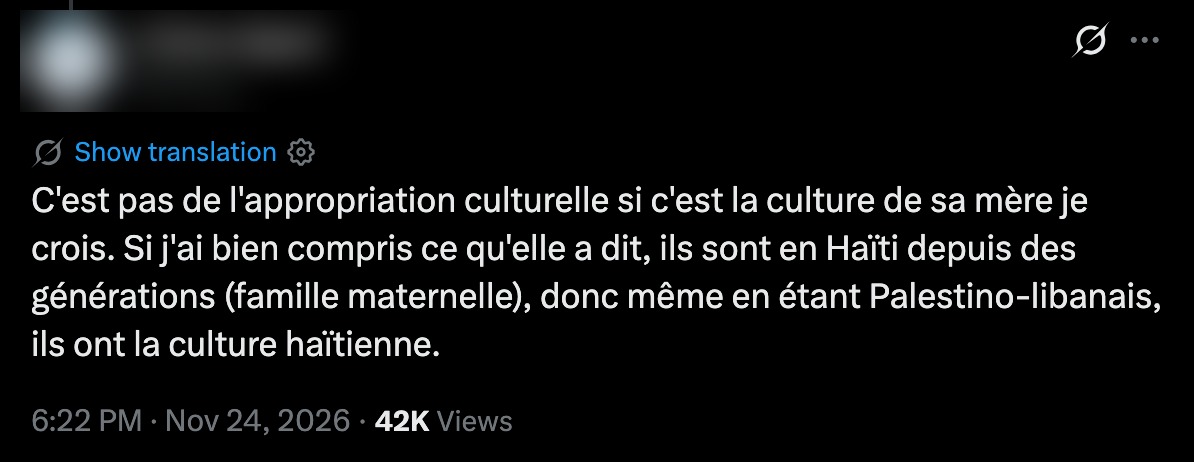
In the comments, many came to her defence. “It’s not cultural appropriation if it’s her mother’s culture,” one user replied on X, noting that the singer’s maternal family has been in Haiti for generations. Others pointed out that Haitians come in every skin colour, or said they understood questions about a lived connection to the culture, without disputing her origins.
This article was corrected on November 25, 2026.
Videos
Watch now.
Reporting by The Haitian Times, Naïka et son identité multiculturelle (23 nov. 2025)
1804 Times, version en kreyòl de « One Track Mind » (28 mai 2026)
Chokarella, Naïka aux NRJ Music Awards 2026 (29 oct. 2026)
X, message à l’origine du débat (24 nov. 2026)
X, message sur la couleur de peau (24 nov. 2026)
X, réponse prenant la défense de Naïka (24 nov. 2026)
NME, portrait de Naïka (16 mars 2026)
Specta (Instagram), « Naïka accusée d’appropriation culturelle » (25 nov. 2026)
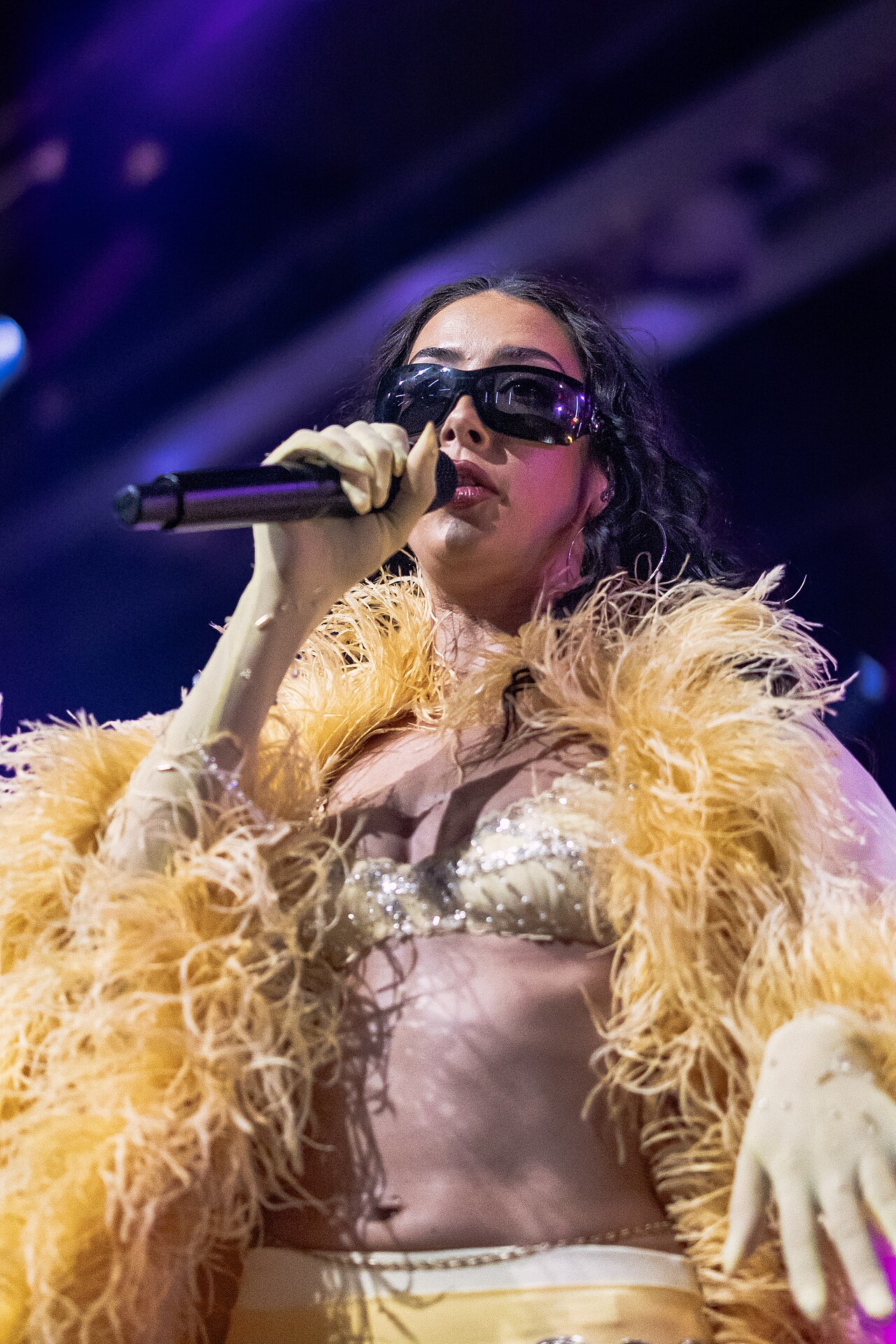
Photo : EGilham, Wikimedia Commons, CC BY-SA 4.0
Comments 0