


Gangs handing out rice: behind the images, 5.94 million Haitians face acute food insecurity
By NAGO News
2 min read
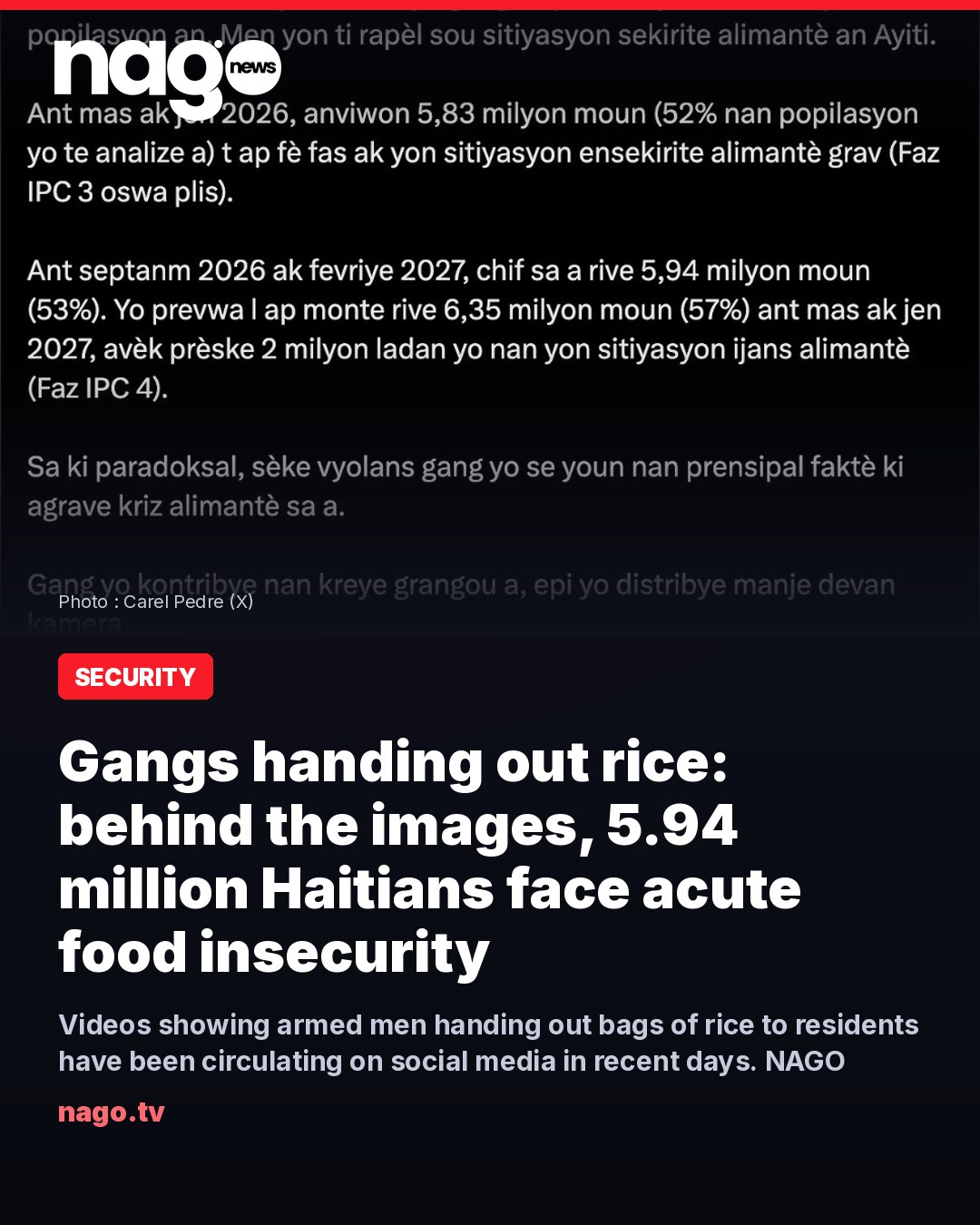
Videos showing armed men handing out bags of rice to residents have been circulating on social media in recent days. NAGO could not verify where or when they were filmed. But the images come from a country where more than half of the population does not have enough to eat.
According to the latest analysis by the IPC, the Integrated Food Security Phase Classification, released on 28 October 2026, more than 5.94 million people, or 53 percent of the population analysed, are in Phase 3 (Crisis) or worse between September 2026 and February 2027. Of these, 1.8 million face Emergency conditions (Phase 4).
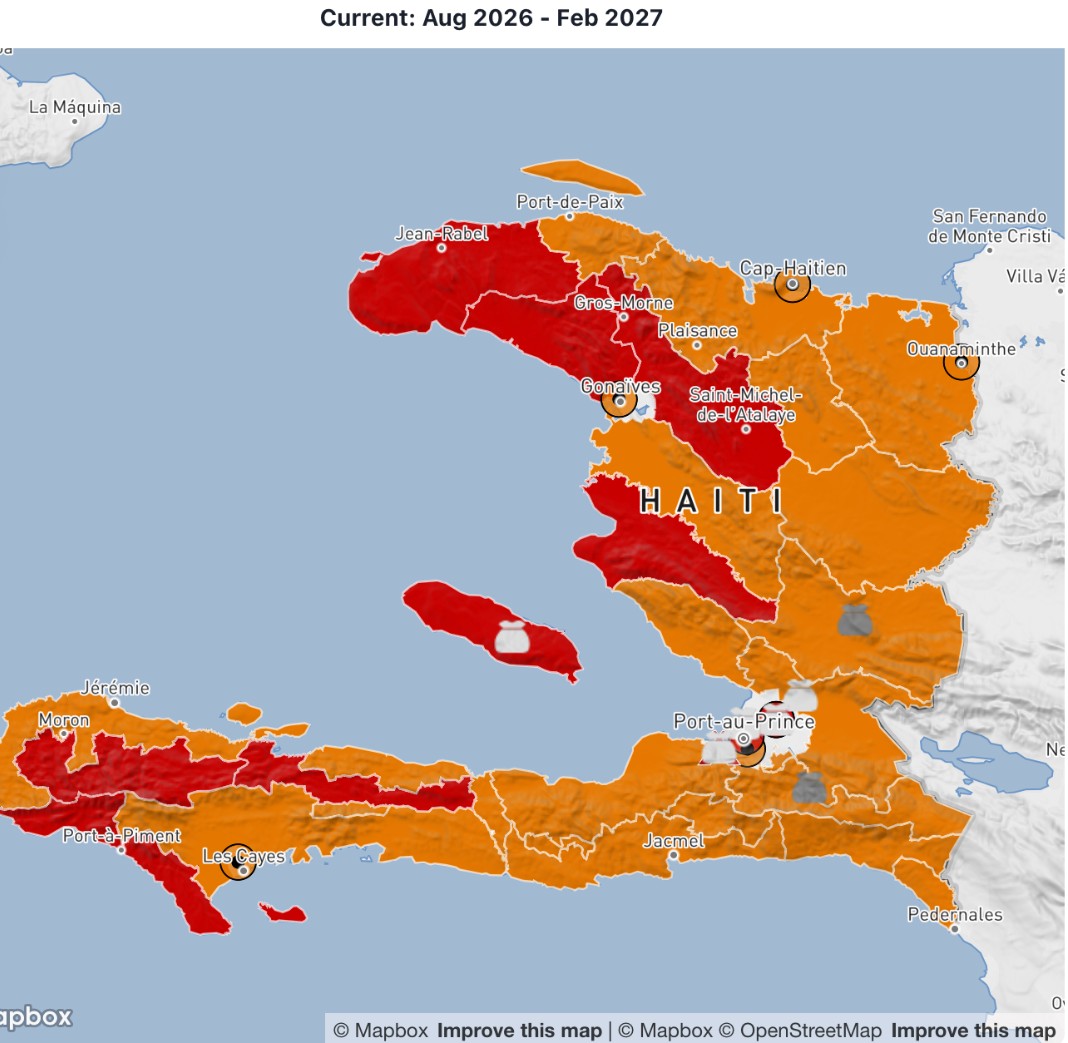
The situation is expected to worsen. Between March and June 2027, the IPC projects 6.35 million people (57 percent) in Phase 3 or worse, including nearly 2 million in Phase 4. Among children, a separate IPC analysis expects 253,700 cases of acute malnutrition among those aged 6 to 59 months between June 2026 and May 2027, including 93,900 cases of severe acute malnutrition.
The IPC names escalating insecurity as the primary driver of the crisis. It displaces families and disrupts livelihoods, farming and markets. Economic decline, high food prices and El Niño-related climate shocks make things worse.
The rice handed out in front of the cameras also comes from somewhere. In its March 2026 report, the UN Panel of Experts on Haiti describes gangs that control remittance houses, pose as police officers and run extortion, including kidnapping for ransom and hidden checkpoints on the roads. In other words, much of their money is taken from the population itself.
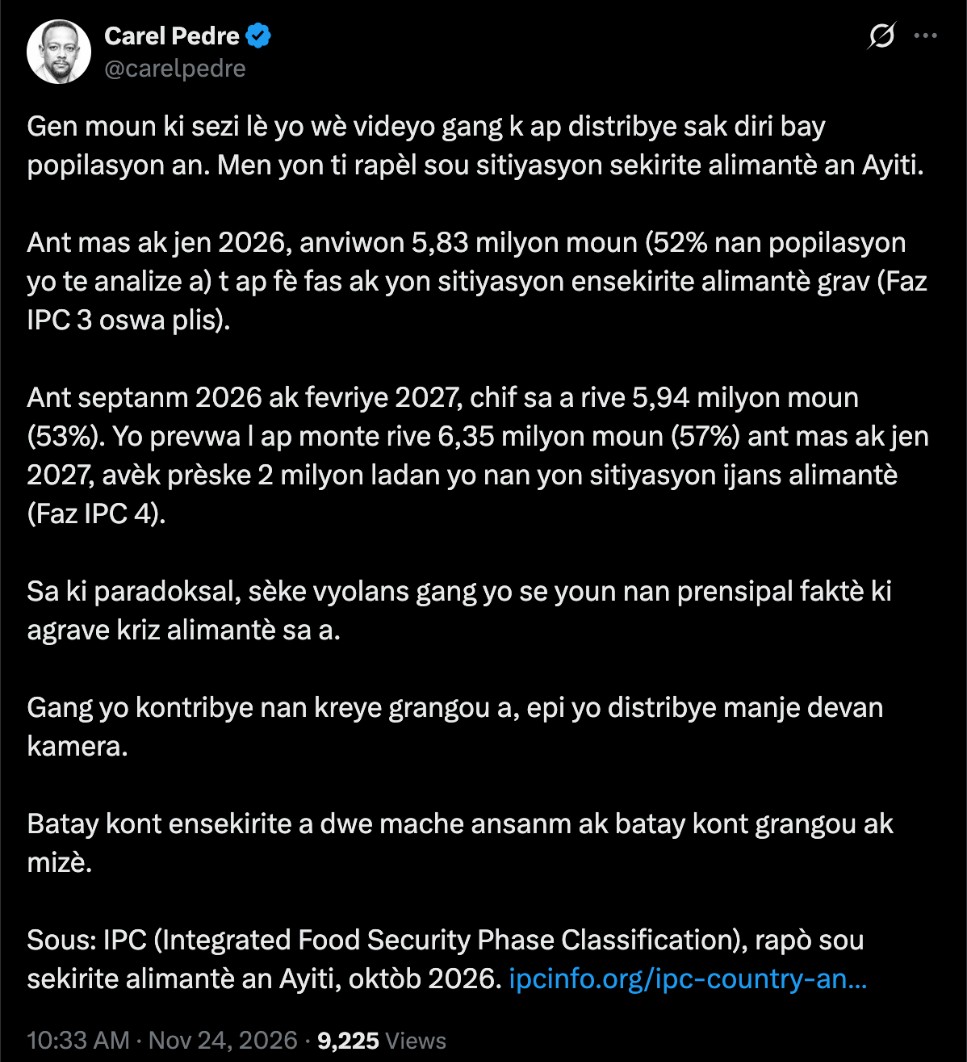
Journalist Carel Pedre summed up the paradox on Tuesday on his X account: the gangs help create the hunger, then hand out food in front of the cameras. The fight against insecurity, he wrote, must go hand in hand with the fight against hunger and poverty.
Watch and share
The reel and the cards for social media.
Videos
Watch now.
IPC, analyses pour Haïti, dont la malnutrition aiguë juin 2026 – mai 2027
Groupe d’experts de l’ONU sur Haïti, rapport intermédiaire S/2026/241 (mars 2026)
Carel Pedre (X), message du 24 nov. 2026
Comments 0