


From Kathmandu to Port-au-Prince, young people take to the streets
5 min read
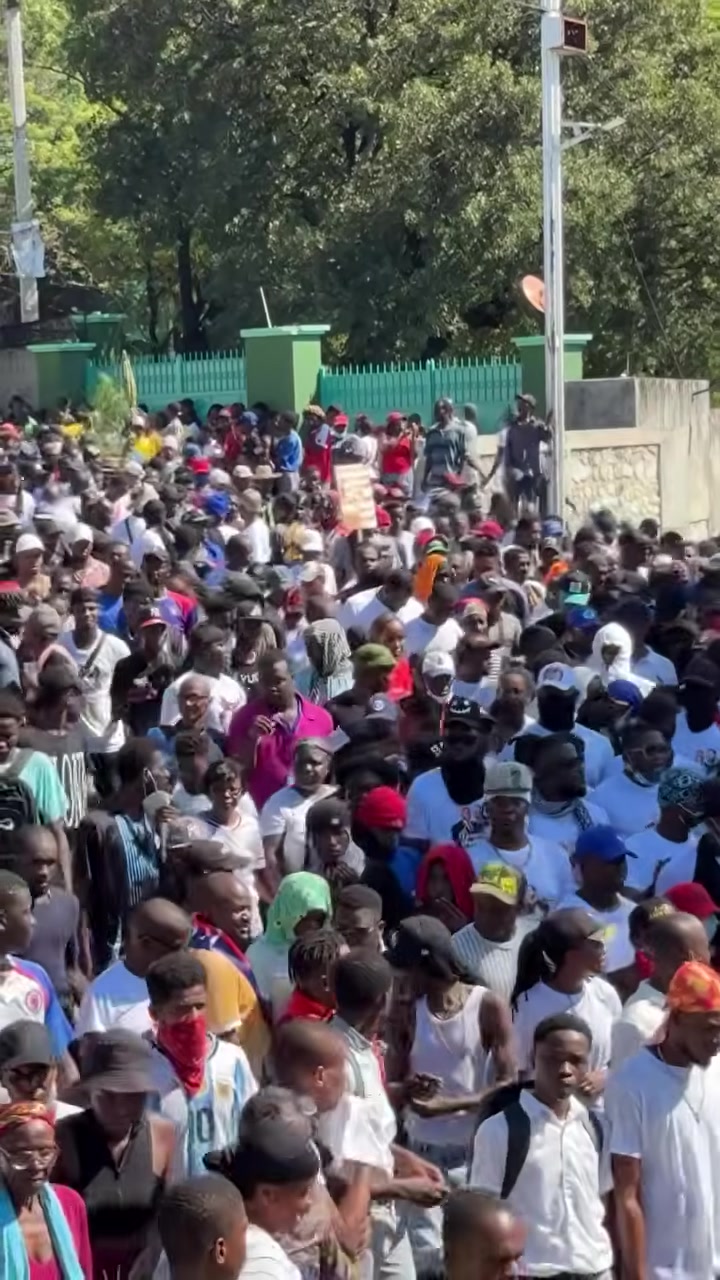
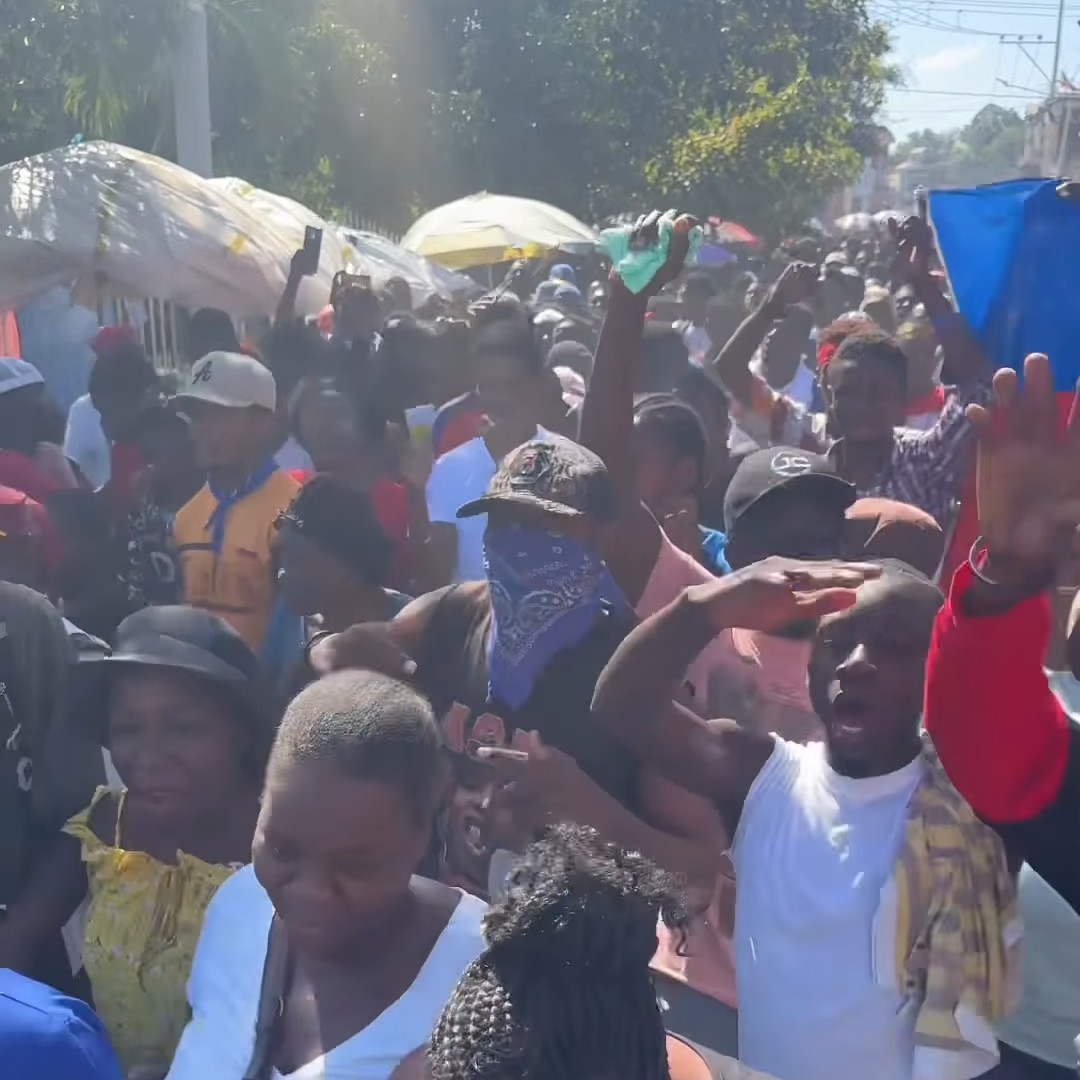
On Tuesday, November 17, thousands of people marched in Port-au-Prince, Jérémie, Jacmel and Saint-Marc in support of Salvadoran President Nayib Bukele and the troops he has deployed against Haiti's gangs. In the capital, the march set off from Lalue. Three days earlier, journalist Michaël Lombard, one of the voices calling people to the streets, had posted on Instagram: "Moman an rive pa gen kanpe 17 novanm on sel kontwol nap tann tout moun" ("The moment has come, no stopping, November 17, one single control, we're waiting for everyone"). The day before the march, he added: "We are not tied to any political party. It is a peaceful march, no burning tires, no smashing."
No party, calls spread on social media, a generation organizing itself: the pattern recalls what the world has seen over the past year, from Nepal to Morocco, from Madagascar to Peru. Yet the comparison has its limits, and they say a lot about Haiti's situation.
In Nepal, it all began with a ban. In early September 2025, the government blocked several major social networks. Young people, already fed up with corruption, took to the streets on September 8. The crackdown killed more than 70 people in a few days. Prime Minister K. P. Sharma Oli resigned, former chief justice Sushila Karki took over a transitional government, and parliament was dissolved. In the March 5, 2026 election, the Rastriya Swatantra Party won 182 of 275 seats, and former rapper Balen Shah became the youngest elected prime minister in the country's history.

In Madagascar, the anger began with water and power cuts at the end of September 2025. Within weeks, the movement brought down President Andry Rajoelina, abandoned by an army unit that sided with the protesters. At least 22 people were killed. In Morocco, a leaderless collective, GenZ 212, named after the country's dialing code, demanded better hospitals and schools. In Peru, a pension reform set off marches against insecurity and corruption. Everywhere, the same pirate flag from the manga One Piece became a rallying sign.
In India, young people took the lead in Ladakh, in the Himalayas. On September 24, 2025, in Leh, the youth wing of a local coalition called a protest demanding statehood and constitutional safeguards for the region. The day turned into clashes: four dead and an office of the ruling party set on fire. Activist Sonam Wangchuk, on hunger strike, described it as an outburst of Gen Z anger. He was arrested two days later.
In the United States, mobilization took another form. The "No Kings" days against Donald Trump's policies drew, according to their organizers, more than five million people on June 14, 2025, and nearly seven million on October 18, in thousands of towns. But that movement rests on established organizations more than on one generation: the American street there is intergenerational.
What Haiti shares with these movements is the method: calls relayed on Instagram and TikTok by young figures with no party label, and marches spreading to new towns since the first ones on November 6 and 7. What sets it apart is the target. In Kathmandu, Antananarivo or Rabat, young people turned on their own leaders. In Port-au-Prince and Jérémie, they are thanking a foreign head of state. "Bukele is here to free us!" protesters chanted on Tuesday. In Jérémie, they are demanding a permanent presence of Salvadoran troops; in Jacmel, the reopening of the road to the Grand Sud. The call to protest from November 16 to 18 also demanded the departure of Prime Minister Alix Didier Fils-Aimé.
Haiti's slogans are not first about corruption, as in Nepal, but about insecurity: the gangs, the blocked roads, the lost neighborhoods. At heart, the demand is the same, a state that protects. But in Haiti, it runs through a savior from abroad.

That is where the fragility lies. El Salvador says its troops will go home once its four aviation technicians, missing since October 18, are found. An analyst at the International Crisis Group warns that today's enthusiasm "could turn into anger against the government if the troops withdraw." Elsewhere, youth movements won resignations within days; deeper change took longer, and in Nepal it came through the ballot box.
Haiti's young people have shown they can fill the streets with no party and no orders from above. In Nepal, the same energy ended up in a polling station. That is likely where the next chapter will be written in Haiti too.
Videos
Watch now.
Reporting by Michaël Lombard (Instagram), appel à marcher le 17 novembre (14 nov. 2026)
Michaël Lombard (Instagram), « Nou pa asosye ak okenn pati politik » (16 nov. 2026)
NAGO News, Manifestations pro-Bukele (17 nov. 2026)
Ayibo Plus (Instagram), marche partie de Lalue (17 nov. 2026)
Haitian Times, « Thousands demonstrate in Haiti's capital to praise Bukele » (17 nov. 2026)
Rezo Nòdwès, appel à manifester du 16 au 18 novembre
Nepal News, « One year of the Gen Z protests: the complete timeline »
CNBC, « Nepal ex-rapper's party wins election in landslide after Gen Z protests » (13 mars 2026)
Wikipédia, 2025 Nepalese Gen Z protests
NPR, « From opposite ends of the continent, Africa's Gen Z youth take to streets » (2 oct. 2025)
Britannica, Generation Z protests
Al Jazeera, « How Gen Z protest wave hit India's Ladakh, killing four » (25 sept. 2025)
Al Jazeera, arrestation de Sonam Wangchuk (26 sept. 2025)
NPR, « No Kings » (18 oct. 2025)
Axios, participation aux marches « No Kings » (18 oct. 2025)
The Conversation, forces et limites des soulèvements de la génération Z
Photo : Himal Subedi, Wikimedia Commons, CC BY-SA 4.0
VisionPopile286 (YouTube), « Manifestation 17 novembre 2026 Capital » (17 nov. 2026)
Découvrir la Grand'Anse (Instagram), marche à Jérémie (17 nov. 2026)
Comments 0