


#NEWS · Live feed
Where have the fireflies gone? 66 species on the island, nearly all found nowhere else
By NAGO News
2 min read
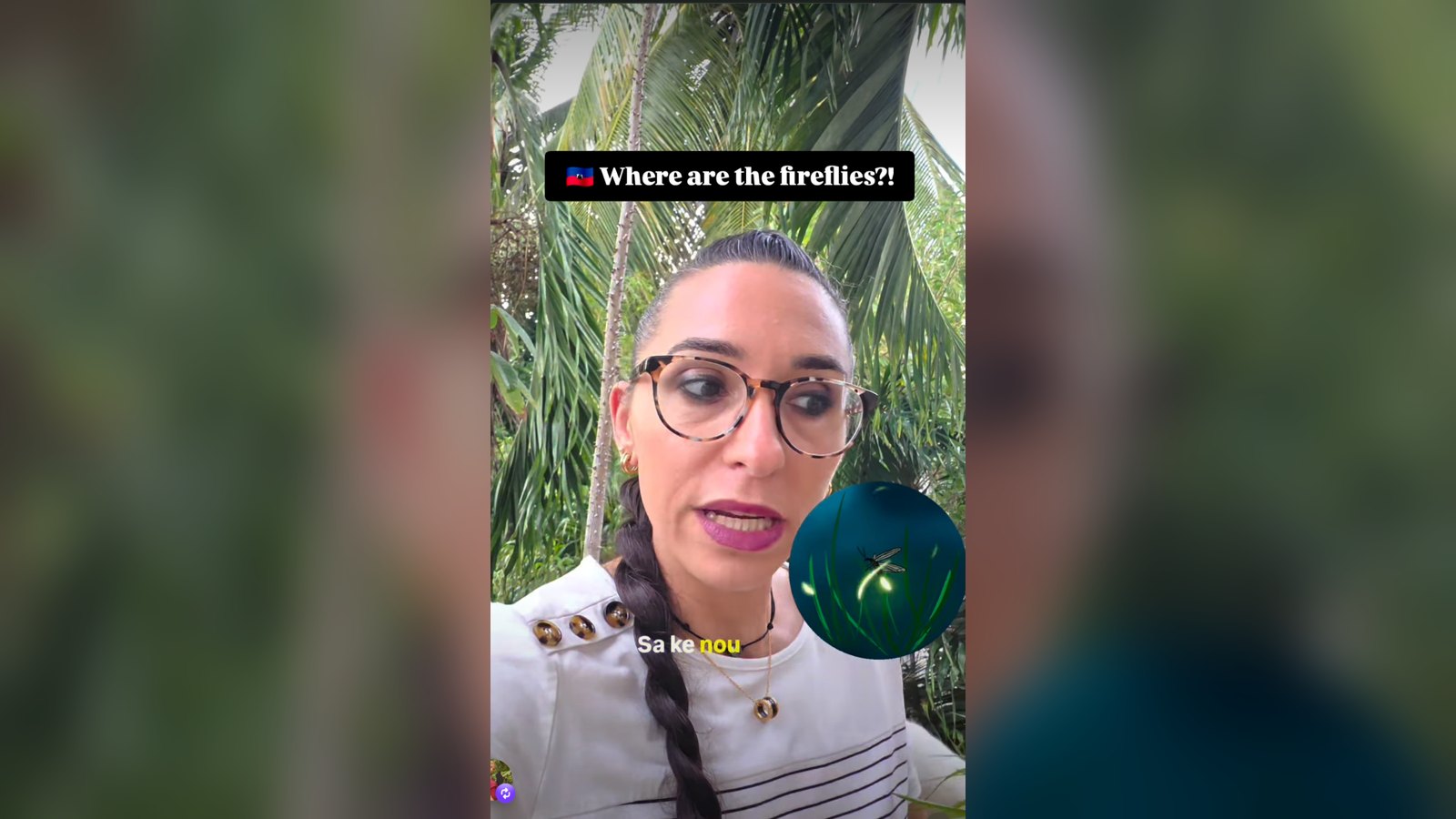
Have you noticed fewer fireflies, the « koukouj », lighting up Haiti's nights? The question comes from Anne-Isabelle Bonifassi, a conservation biologist, National Geographic Explorer and executive director of the organisation Haiti National Trust, in a video posted on Instagram.
She explains that a firefly's glow comes from a chemical reaction, bioluminescence, and that these insects spend much of their lives hidden in the soil and leaf litter, where their larvae hunt small invertebrates. Their survival therefore depends on a whole ecosystem: moist soils, fallen leaves, vegetation and the animals they feed on.
According to the biologist, 66 firefly species have been recorded on the island, 64 of which live nowhere else. The figure of 66 matches survey work published by entomologists in 2009, which raised the number of species known on the island from 34 to 66. A Smithsonian entomologist also notes that nearly all species in the Greater Antilles are unique to their own island.
The same research shows that 57 of the 66 species are found in only one of the two ancient islands that came together to form Haiti and the Dominican Republic: the north and centre of the island on one side, and the southern peninsula and the land south of the Enriquillo basin on the other.
Fireflies favour humid places and move little, which makes them vulnerable. The same entomologist notes that, with habitat loss across the tropics, the extinction rate for fireflies could be especially high.
« When forests disappear, we don't just lose trees », writes Anne-Isabelle Bonifassi, who argues that protecting biodiversity means protecting entire ecosystems if these little lights are to keep illuminating Haiti's nights.
Videos
Watch now.
Reporting by Anne-Isabelle Bonifassi (@nisaexplorer), « Where are the fireflies? » (Instagram)
Anne-Isabelle Bonifassi, National Geographic Explorers
By NAGO News
Comments 0