


#NEWS · Live feed · Dominican Republic
In Jimaní, the binational market holds up despite Haiti's crisis
By NAGO News
2 min read
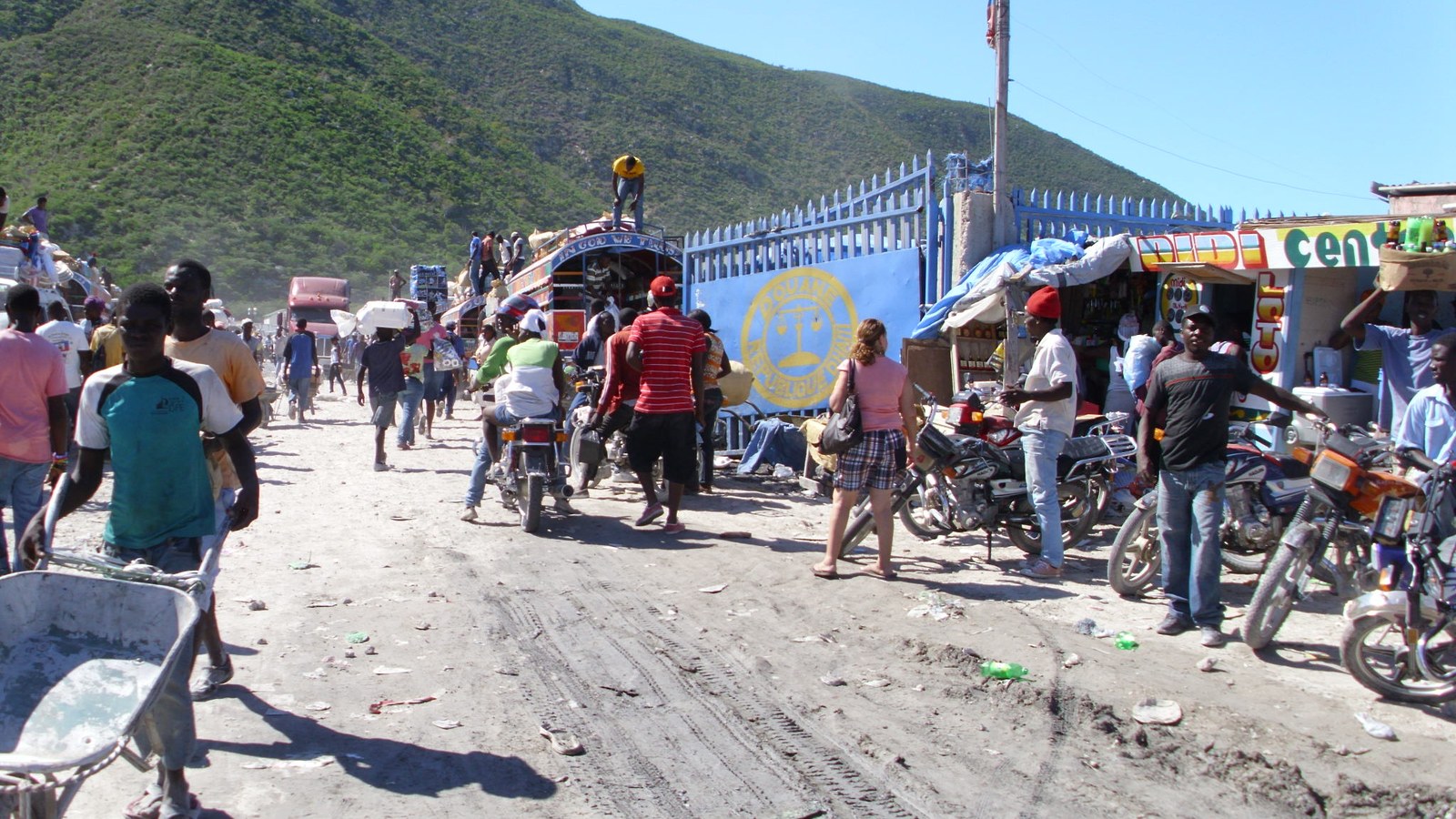
Every morning at 8 a.m., a metal gate swings open in Jimaní, a border crossing in the southwest of the Dominican Republic opposite Malpasse. Thousands of people, overwhelmingly Haitians, pour into the binational market, where trade stays lively despite the crisis and violence in Haiti.
On the Haitian side, Border Police (Polifront) officers open their own gate to let the crowd into the "no man's land," about a hundred meters of dusty road watched closely by armed Dominican soldiers and cameras.
What is sold, what is bought
Many Haitian women arrive with what they managed to harvest: green plantains, pineapples, onions, potatoes, carrots and tomatoes, often undersized for lack of fertilizer, laid out on the ground or on sacks. Others sell eggs or dried fish.
Going the other way, men push wheelbarrows loaded with soft drinks, canned goods, toilet paper and plastic utensils bought wholesale to resell in Port-au-Prince. Dominican pesos and dollars dominate; the gourde is used mostly for small purchases among Haitians.
"Here, you don't hear gunfire"
"The problems don't affect us here," says Anil, a Haitian who loads and unloads boxes near the border for about 200 pesos a day, just over $3. A Dominican shopkeeper, Mily Pérez, says sales sometimes drop because of security checks, "but here you don't hear gunfire."
According to Col. Mejía Guerrero, director of coordinated border management, about 700 vehicles, from trucks to tap-taps, pass through the market each week. The gate closes before 5 p.m.
This article was corrected on November 14, 2026.
Videos
Watch now.
Photo : Jos1950, poste frontière de Jimaní-Malpasse, 2014 (Wikimedia Commons, CC BY-SA 4.0)
By NAGO News
Comments 0